Status as of October 2026. Below is a summary, not legal advice; specific obligations for your building are verified before the proposal.
What the law requires
Requirements for charging points at buildings stem from Section 167 of the Building Act and Decree No. 146/2024 Coll. On construction requirements. They differ depending on whether it is a new or existing building.
| New or substantially renovated non-residential building | Existing non-residential building | |
|---|---|---|
| Who is affected | More than 10 parking spaces. | More than 20 parking spaces where energy is used for heating or cooling. |
| What is required | At least one charging point and cable duct for every fifth parking space. | At least one charging point for every ten parking spaces, or cable preparation for at least half of the parking spaces. |
| Until when | During construction or renovation. | 1 January 2027. |
Cable preparation in existing buildings is usually cheaper than installing the full number of stations, but it must be done properly. The route, cable size and space in the distribution board are set once; adding a station to a prepared bay then takes just a few hours.
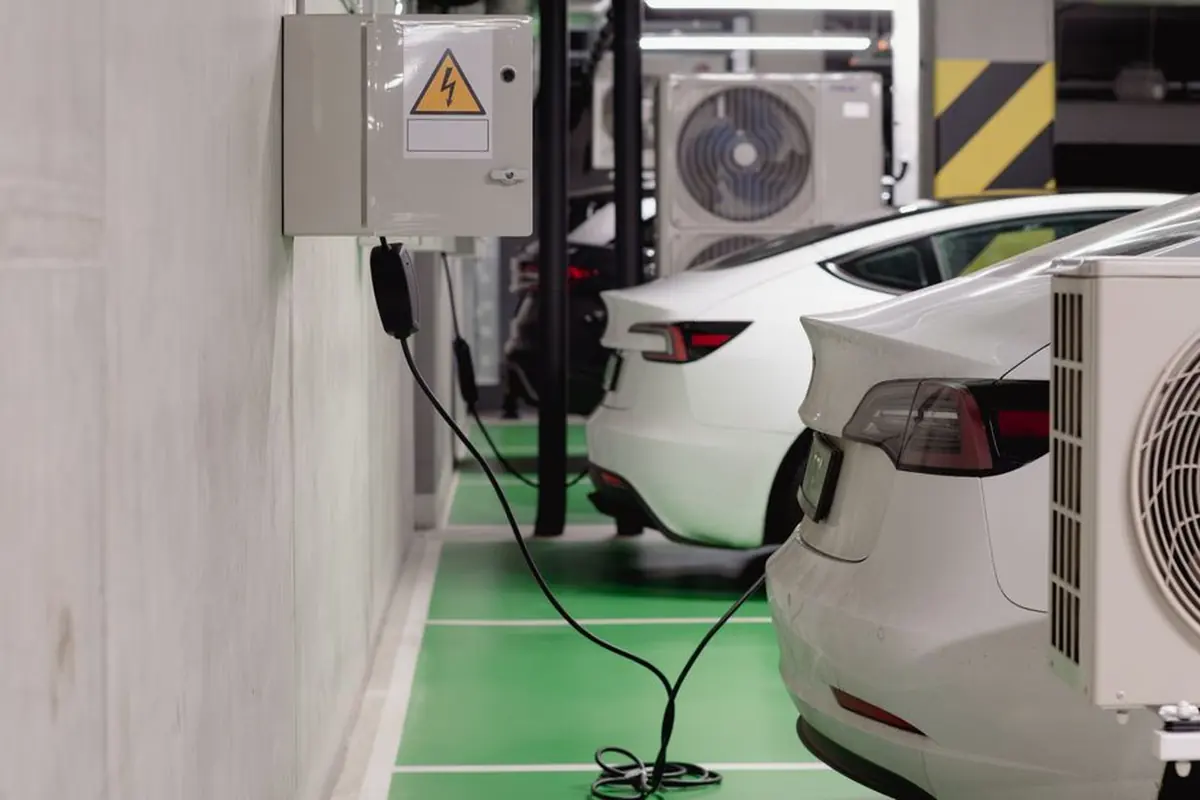
Power is shared; otherwise, the connection is upgraded
When full power is calculated for each parking space individually, the required input becomes so high that the supply connection must be upgraded. At company car parks, this is by far the most expensive item in the entire project and often the longest to complete.
Controlled charging handles this differently: it distributes the available power among the vehicles currently connected and ensures the building's capacity is not exceeded. Vehicles remain parked for hours, so slower charging does not pose a problem. This usually allows the system to fit within the existing connection.
What we do for you
- Assessment of whether and to what extent the obligation applies to your building.
- Analysis of available power input and reserve capacity in the distribution system to clarify what can be done without reinforcing the supply connection.
- Layout design of charging stations, number of charging points and cable preparation for future phases.
- Power management between charging stations and setting a limit for the entire building.
- User identification and consumption tracking for employees and visitors.
- Installation, inspection, handover of documentation and servicing including remote monitoring.
Apartment buildings and garages
For apartment buildings, an agreement is added to the technical specifications. The assembly's consent determines who pays for the electricity consumed and how to proceed if another owner wishes to install a station. Therefore, preparation is made for multiple parking spaces at once, even if only one station is installed initially. Cutting new routes in finished garages later is the most expensive way to achieve this.
Sources: Act No. 283/2021 Coll., Building Act, Section 167; Decree No. 146/2024 Coll. On construction requirements; expert summaries for 2026.